(TakePart) The unrest in Baltimore following the death of Freddie Gray—who died of a severed spine while in police custody—seemed to have caught elected officials, the public, and the media off guard. And those who are far removed from the problems, the challenges, and the indignities facing poor and disenfranchised communities in that city shake their heads in disbelief and wonder why this is all happening.
Surely, the distant observer or armchair pundit has questions. Why are they protesting? Why are they destroying their own neighborhoods? Why did they loot the CVS? Why didn’t the suspect simply comply with the police and avoid causing his own death?
These questions reflect the very real disconnect between the haves and the have nots in the land of the free, and the gaping chasm on matters of race. It’s impossible to comprehend what’s happening here and now—or know the issues we have yet to face—without having an intimate awareness of black America’s history.

Showing posts with label racial profiling. Show all posts
Showing posts with label racial profiling. Show all posts


August 2, 2013
This week: No Ray Kelly for Homeland Security, and California prison strike
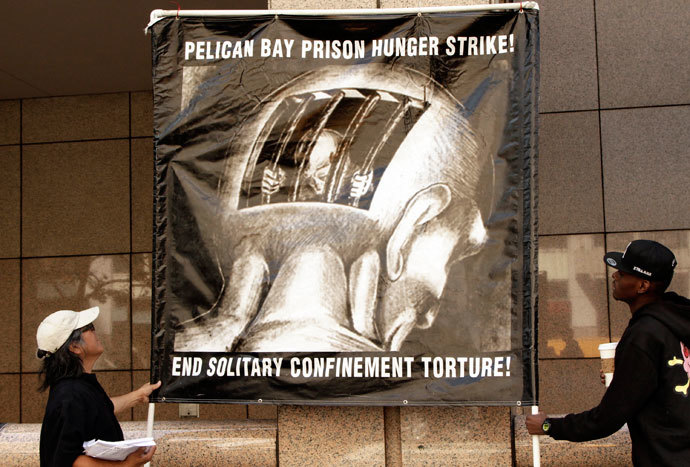
A criminal justice double header this week:
In theGrio, my thoughts on why Obama should NOT tap NYPD commissioner Ray Kelly for the head of Homeland Security (hint: racial profiling). Click HERE for more.
And in McClatchy-Tribune News Service, a look at the mass hunger strike taking place in California's prison system. Click HERE for more.
July 24, 2013
Trayvon to Voting Rights: Blacks Screwed by 2010 Election
This week I spoke with Denis Campbell, publisher of UK Progressive magazine and the host of Worldview, based in Wales. We talked about a number of things, including the Trayvon Martin murder trial, the Voting Rights Act, Republican obstruction and my article in theGrio on the impact of the 2010 election on African Americans. Watch below or follow the link:
April 27, 2012
20th Anniversary of the Los Angeles Riots

I have back-to-back articles this week on the 20th anniversary of the L.A. Riots, which resulted from the verdict in the Rodney King beating case. You can go to theGrio for an analysis on the past two decades of race relations in the U.S., and to the Albany Times Union for a piece on I wrote for the Progressive on racial profiling and police brutality.
March 23, 2012
Trayvon Martin as Emmett Till

In my column in theGrio this week I examine the Trayvon Martin killing and its wider implications for the country:
Trayvon Martin's killing continues to expose the problems black men face, the low priority they are assigned as black victims, and the unfair treatment they face at the hands of the police and in the justice system.
Unfortunately, there have been too many Emmett Tills and Trayvon Martins, each a catalyst in his or her own right.
Check out theGrio for more.
June 2, 2011
18 Years Later, Will Justice Come for Stephen Lawrence?
A reader recently asked me if I think justice will finally come to Stephen Lawrence. This came after news that two men, David Norris and Gary Dobson, will face trial for his 1993 murder.
Who is Stephen Lawrence, you ask? If you're from the U.S., chances are that you've never heard of him, although there was a PBS docudrama about the case some years ago. He was a black teenager from south-east London, an honors student and an aspiring architect who was studying physics. On the evening of April 22, 1993, Lawrence and his friend Duwayne Brooks were waiting at a bus stop when a racist white mob descended upon them. One of the attackers yelled "what, what n****r?" The group of five or six men quickly crossed the road and stabbed Lawrence twice in his upper torso to a depth of five inches, severing two auxiliary arteries. In this horrific incident that lasted no more than 15-20 seconds, Lawrence fled 130 yards and then bled to death.
According to the pathologist's report, "It is surprising that he managed to get 130 yards with all the injuries he had, but also the fact that the deep penetrating wound of the right side caused the upper lobe to partially collapse his lung. It is therefore a testimony to Stephen's physical fitness that he was able to run the distance he did before collapsing". Due to the heavy layers of clothing he was wearing, Laurence was drenched in blood.
Stephen's body was flown to Jamaica, where he was buried. Dobson was tried for the murder but was acquitted.
A damning inquiry conducted by Sir William Macpherson blamed "professional incompetence, institutional racism and a failure of leadership" for the blunders in the investigation of Stephen Lawrence's murder. The 1999 report also concluded that from the very top of the ranks, London's Metropolitan Police Service was riddled by "pernicious and institutional racism" in the investigation of this crime, the racial disparity in "stop and search figures," the underreporting of racial crimes, and the failure of police training in racial sensitivity.
Duwayne Brooks, who was also a victim, was treated by the police as a witness. "We are driven to the conclusion that Mr. Brooks was stereotyped as a young black man exhibiting unpleasant hostility and agitation, who could not be expected to help, and whose condition and status simply did not need further examination or understanding," according to the Macpherson report. "We believe that Mr. Brooks' colour and such stereotyping played their part in the collective failure of those involved to treat him properly and according to his needs."
Macpherson made 70 recommendations in the Stephen Lawrence inquiry, including reforms of the police force, the justice system, the schools and the civil service, making the use of racial language in private a criminal offense, and the aggressive recruitment of black and Asian police officers. Perhaps one of the most significant recommendations, now the law, is the abolition of the centuries-old double jeopardy rule, which prevented a person from being tried twice for the same crime.
And now, after years of allegations of official corruption and the withholding of evidence, David Norris and Gary Dobson -- whose 1996 acquittal was quashed by an appeals court -- now stand trial for an 18-year-old murder.
I first heard about the Lawrence case in 1998, when I was in London working with Amnesty International. Subsequently, I produced some news segments on the killing and its aftermath as a producer for Democracy Now! in New York. For Britons, the Stephen Lawrence case was a watershed moment in race relations in that country, and a turning point on the problems of hate crimes and racial violence, and the issue of police corruption and misconduct. In that regard, the significance of this incident was not unlike that of the 1960s riots throughout America's urban centers, the Rodney King beating in Los Angeles, the police torture of Abner Louima, or the fatal police shooting of Amadou Diallo and Sean Bell in New York.
And still today, some black observers, including Stephen's mother Doreen Lawrence, say that little has changed in the way black Britons are treated by the police. Five years after the Macpherson report, an investigation into diversity and the policies, procedures and employment practices in the Metropolitan police called for change. Meanwhile, today the London police still maintain a white male culture. Hate crimes against minority groups continue. Parliament could pass legislation that would dismantle the Independent Police Complaints Commission, the regulatory body established after Lawrence's death that brought transparency and structure to the handling of complaints against the police. And a British prison system eager to emulate the U.S. -- that is, the "land of the free" with its pernicious war on terror and its prison-industrial-complex -- incarcerates black, Asian and increasingly Muslim men at a disproportionate rate.
So, will the family of Stephen Lawrence finally find justice in a London courtroom? I don't have the answer, but we can only hope. In any case, there's much work to do, in Britain and here in America.
Who is Stephen Lawrence, you ask? If you're from the U.S., chances are that you've never heard of him, although there was a PBS docudrama about the case some years ago. He was a black teenager from south-east London, an honors student and an aspiring architect who was studying physics. On the evening of April 22, 1993, Lawrence and his friend Duwayne Brooks were waiting at a bus stop when a racist white mob descended upon them. One of the attackers yelled "what, what n****r?" The group of five or six men quickly crossed the road and stabbed Lawrence twice in his upper torso to a depth of five inches, severing two auxiliary arteries. In this horrific incident that lasted no more than 15-20 seconds, Lawrence fled 130 yards and then bled to death.
According to the pathologist's report, "It is surprising that he managed to get 130 yards with all the injuries he had, but also the fact that the deep penetrating wound of the right side caused the upper lobe to partially collapse his lung. It is therefore a testimony to Stephen's physical fitness that he was able to run the distance he did before collapsing". Due to the heavy layers of clothing he was wearing, Laurence was drenched in blood.
Stephen's body was flown to Jamaica, where he was buried. Dobson was tried for the murder but was acquitted.
A damning inquiry conducted by Sir William Macpherson blamed "professional incompetence, institutional racism and a failure of leadership" for the blunders in the investigation of Stephen Lawrence's murder. The 1999 report also concluded that from the very top of the ranks, London's Metropolitan Police Service was riddled by "pernicious and institutional racism" in the investigation of this crime, the racial disparity in "stop and search figures," the underreporting of racial crimes, and the failure of police training in racial sensitivity.
Duwayne Brooks, who was also a victim, was treated by the police as a witness. "We are driven to the conclusion that Mr. Brooks was stereotyped as a young black man exhibiting unpleasant hostility and agitation, who could not be expected to help, and whose condition and status simply did not need further examination or understanding," according to the Macpherson report. "We believe that Mr. Brooks' colour and such stereotyping played their part in the collective failure of those involved to treat him properly and according to his needs."
Macpherson made 70 recommendations in the Stephen Lawrence inquiry, including reforms of the police force, the justice system, the schools and the civil service, making the use of racial language in private a criminal offense, and the aggressive recruitment of black and Asian police officers. Perhaps one of the most significant recommendations, now the law, is the abolition of the centuries-old double jeopardy rule, which prevented a person from being tried twice for the same crime.
And now, after years of allegations of official corruption and the withholding of evidence, David Norris and Gary Dobson -- whose 1996 acquittal was quashed by an appeals court -- now stand trial for an 18-year-old murder.
I first heard about the Lawrence case in 1998, when I was in London working with Amnesty International. Subsequently, I produced some news segments on the killing and its aftermath as a producer for Democracy Now! in New York. For Britons, the Stephen Lawrence case was a watershed moment in race relations in that country, and a turning point on the problems of hate crimes and racial violence, and the issue of police corruption and misconduct. In that regard, the significance of this incident was not unlike that of the 1960s riots throughout America's urban centers, the Rodney King beating in Los Angeles, the police torture of Abner Louima, or the fatal police shooting of Amadou Diallo and Sean Bell in New York.
And still today, some black observers, including Stephen's mother Doreen Lawrence, say that little has changed in the way black Britons are treated by the police. Five years after the Macpherson report, an investigation into diversity and the policies, procedures and employment practices in the Metropolitan police called for change. Meanwhile, today the London police still maintain a white male culture. Hate crimes against minority groups continue. Parliament could pass legislation that would dismantle the Independent Police Complaints Commission, the regulatory body established after Lawrence's death that brought transparency and structure to the handling of complaints against the police. And a British prison system eager to emulate the U.S. -- that is, the "land of the free" with its pernicious war on terror and its prison-industrial-complex -- incarcerates black, Asian and increasingly Muslim men at a disproportionate rate.
So, will the family of Stephen Lawrence finally find justice in a London courtroom? I don't have the answer, but we can only hope. In any case, there's much work to do, in Britain and here in America.
February 21, 2011
Cops Are Missing the Bad Guys While Profiling the Black Guys
The history of African Americans is one of great accomplishments amidst the legacy of slavery and Jim Crow. That legacy follows black people, and particularly black men, to this day. And it is enough to make you red-hot burning mad. Although some are ready to usher in a new post-racial era of colorblindness, it is clear that their efforts are grossly premature.
In America, race is a proxy for violence. Black men are regarded as a criminal element, and racial profiling is a practice that goes far beyond the justice system. It is culturally ingrained and normalized. In the days of old, when black people were not allowed to roam about unattended or without permission, slave patrols policed the plantations and hunted down fugitives.
Similarly, today, police sweep through communities of color, searching for criminals. Any black man will do. And cops are searching for drugs, not because black or Latino people use the most drugs, but because of preference, of policy. Drug use among white youth is greater than among youth of color, but you will never see the police descend upon the nation's college campuses, round up those who "fit the description" and force them to endure a demeaning arrest. After all, society views them as the victims. Society has already decided who should be designated as its criminals, even if the "suspects" are as innocuous and upstanding as Henry Louis Gates -- a Harvard professor who was arrested for standing on his front porch and attempting to enter his own home. But status is not what counts; it's all about race.
Twelve Angry Men: True Stories of Being a Black Man in America Today is a new book which tells the first-person accounts of black men who, like Professor Gates, have been there. These twelve men were victims of racial profiling, at the wrong place at the wrong time -- which for a black man could mean anywhere. Edited by Gregory S. Parks and Matthew W. Hughey, Twelve Angry Men contains a powerful introduction by Harvard law professor Lani Guinier.
A diverse group of people shares their encounters with the police, including a New York Times reporter who was detained while on assignment; Joe Morgan, a baseball legend who was racially profiled at LAX; Joshua T. Wiley, a hip hop artist who is constantly harassed by police, and Paul Butler, a law professor and former federal prosecutor who was stopped by the cops for living in a nice neighborhood. Meanwhile, Byron Bain, a Harvard Law student, was told by his arresting officer that he must attend the school on a "ball scholarship." Bain compiled a tragically comical "Bill of Rights for Black Men," which includes as its first and second amendments, "Congress can make no law altering the established fact that a black man is a n****r," and "The right of any white person to apprehend a n****r will not be infringed." Newly arrived, foreign-born black men with British accents are not immune from profiling and arrest. Even lawmakers are not exempt, as Congressman Danny Davis recounts his experience of racial profiling by the Chicago police while driving home from his weekly radio show.
Throughout the book, which is factual yet reads like a novel, these twelve men share the humiliation of being told that you are not allowed in a certain neighborhood, and the terror that comes with having a gun pointed to your head. Told where they can and cannot go and forced to produce their identification, they compare their experiences to antebellum slaves, black South Africans under apartheid, and Palestinians in the Occupied Territories. One man, who was stopped at least once a month and as many as three times, had to leave home early enough in order to account for the possibility of being stopped. Perhaps one of the more appalling cases was of a boy in Prince George's County, Maryland, who was accused of shoplifting by a police officer moonlighting as a department store security guard. The guard made the youth take off his shirt, go home and return with his sales receipt to prove that he purchased it. The young man was awarded $850,000 in damages by a federal jury.
Although much of Twelve Angry Men deals with the anecdotal and the personal, the book also delves into the statistical, including a report on racial profiling as practiced by the New York Police Department. According to the report, which was released by the Center for Constitutional Rights (CCR), race, not crime, drives police stops and frisks. This is what blacks and Latinos have been saying for years. And no matter what the neighborhood -- low crime or high crime, black, Latino, white or mixed, the results are always the same.
For example, 80 percent of the stops made by the NYPD between 2005 and 2008 were of African Americans, who are only 25 percent of the city's population. Whites, who make up 44 percent of the city's population, were stopped only 10 percent of the time. Over the past six years, nearly half of all stops were made on the basis of a vague category called "furtive movements," while only 15 percent cited "fits relevant description." In over half of the stops, the officers noted "high crime area" as an "additional circumstance," even in low crime areas.
"CCR has been litigating against the NYPD's racial profiling and suspicionless stops-and-frisks since 1999. For its part, during all this time, the police have claimed that they stop people based upon reasonable suspicion that a crime has been committed, based upon a description of a perpetrator, and as an effective tool to get guns off the street," Vincent Warren, CCR's executive director, recently told me. "The significance of this report is that New York City must finally come to grips with its racial profiling problem. There are hundreds of thousands of innocent Black and Brown New Yorkers who daily suffer the indignities of these illegal police tactics. And the police department should be protecting them and not harassing them."
Reading Twelve Angry Men made me angry, not because the subject matter was brand new to me, but because it was far too familiar -- not only as a black man, but also as a human rights advocate who worked with police brutality victims and their families back in the 1990s and decided to go to law school as a result. Whether or not racial profiling is a new subject for you, this book should spark some discussions. And bringing this problem into the light is the only way we can begin to fight it. Black folks are not the only victims of racial profiling, to be sure. But examining America's badge of slavery is a good place to start.
In America, race is a proxy for violence. Black men are regarded as a criminal element, and racial profiling is a practice that goes far beyond the justice system. It is culturally ingrained and normalized. In the days of old, when black people were not allowed to roam about unattended or without permission, slave patrols policed the plantations and hunted down fugitives.
Similarly, today, police sweep through communities of color, searching for criminals. Any black man will do. And cops are searching for drugs, not because black or Latino people use the most drugs, but because of preference, of policy. Drug use among white youth is greater than among youth of color, but you will never see the police descend upon the nation's college campuses, round up those who "fit the description" and force them to endure a demeaning arrest. After all, society views them as the victims. Society has already decided who should be designated as its criminals, even if the "suspects" are as innocuous and upstanding as Henry Louis Gates -- a Harvard professor who was arrested for standing on his front porch and attempting to enter his own home. But status is not what counts; it's all about race.
Twelve Angry Men: True Stories of Being a Black Man in America Today is a new book which tells the first-person accounts of black men who, like Professor Gates, have been there. These twelve men were victims of racial profiling, at the wrong place at the wrong time -- which for a black man could mean anywhere. Edited by Gregory S. Parks and Matthew W. Hughey, Twelve Angry Men contains a powerful introduction by Harvard law professor Lani Guinier.
A diverse group of people shares their encounters with the police, including a New York Times reporter who was detained while on assignment; Joe Morgan, a baseball legend who was racially profiled at LAX; Joshua T. Wiley, a hip hop artist who is constantly harassed by police, and Paul Butler, a law professor and former federal prosecutor who was stopped by the cops for living in a nice neighborhood. Meanwhile, Byron Bain, a Harvard Law student, was told by his arresting officer that he must attend the school on a "ball scholarship." Bain compiled a tragically comical "Bill of Rights for Black Men," which includes as its first and second amendments, "Congress can make no law altering the established fact that a black man is a n****r," and "The right of any white person to apprehend a n****r will not be infringed." Newly arrived, foreign-born black men with British accents are not immune from profiling and arrest. Even lawmakers are not exempt, as Congressman Danny Davis recounts his experience of racial profiling by the Chicago police while driving home from his weekly radio show.
Throughout the book, which is factual yet reads like a novel, these twelve men share the humiliation of being told that you are not allowed in a certain neighborhood, and the terror that comes with having a gun pointed to your head. Told where they can and cannot go and forced to produce their identification, they compare their experiences to antebellum slaves, black South Africans under apartheid, and Palestinians in the Occupied Territories. One man, who was stopped at least once a month and as many as three times, had to leave home early enough in order to account for the possibility of being stopped. Perhaps one of the more appalling cases was of a boy in Prince George's County, Maryland, who was accused of shoplifting by a police officer moonlighting as a department store security guard. The guard made the youth take off his shirt, go home and return with his sales receipt to prove that he purchased it. The young man was awarded $850,000 in damages by a federal jury.
Although much of Twelve Angry Men deals with the anecdotal and the personal, the book also delves into the statistical, including a report on racial profiling as practiced by the New York Police Department. According to the report, which was released by the Center for Constitutional Rights (CCR), race, not crime, drives police stops and frisks. This is what blacks and Latinos have been saying for years. And no matter what the neighborhood -- low crime or high crime, black, Latino, white or mixed, the results are always the same.
For example, 80 percent of the stops made by the NYPD between 2005 and 2008 were of African Americans, who are only 25 percent of the city's population. Whites, who make up 44 percent of the city's population, were stopped only 10 percent of the time. Over the past six years, nearly half of all stops were made on the basis of a vague category called "furtive movements," while only 15 percent cited "fits relevant description." In over half of the stops, the officers noted "high crime area" as an "additional circumstance," even in low crime areas.
"CCR has been litigating against the NYPD's racial profiling and suspicionless stops-and-frisks since 1999. For its part, during all this time, the police have claimed that they stop people based upon reasonable suspicion that a crime has been committed, based upon a description of a perpetrator, and as an effective tool to get guns off the street," Vincent Warren, CCR's executive director, recently told me. "The significance of this report is that New York City must finally come to grips with its racial profiling problem. There are hundreds of thousands of innocent Black and Brown New Yorkers who daily suffer the indignities of these illegal police tactics. And the police department should be protecting them and not harassing them."
Reading Twelve Angry Men made me angry, not because the subject matter was brand new to me, but because it was far too familiar -- not only as a black man, but also as a human rights advocate who worked with police brutality victims and their families back in the 1990s and decided to go to law school as a result. Whether or not racial profiling is a new subject for you, this book should spark some discussions. And bringing this problem into the light is the only way we can begin to fight it. Black folks are not the only victims of racial profiling, to be sure. But examining America's badge of slavery is a good place to start.
Subscribe to:
Posts (Atom)