(theGrio) Louis Scarcella was considered one of New York’s finest, then the word fine leaves much to be desired.
By all accounts, the former NYPD detective is a bad man who helped put innocent people behind bars for decades, used phony witnesses to get the job done, and even beating some suspects into false confessions. And he is costing the city millions of dollars. You know you’re bad when you have a reputation among prisoners for being crooked or when the district attorney begs the judge to throw out the convictions of people you arrested.
Scarcella, 62, was on the force for nearly three decades, stationed in Brooklyn. And he had an impressive record of nabbing killers, doing whatever it took to get suspects to talk. As Sean Flynn reported in GQ magazine, the heavily decorated Scarcella received Chief of Detectives’ Award for Outstanding Police Investigation for the cases he purportedly solved.

Showing posts with label New York City. Show all posts
Showing posts with label New York City. Show all posts
April 14, 2015


July 8, 2014
Waiting For Environmental Justice to Come

Environmental toxins and pollutants know no class or race, and yet government policies and corporate activities place an undue burden on the health of the poor and communities of color.
Throughout the United States, children of color and poor children are disproportionately exposed to health hazards while attending public school, placing them at high risk. Often, this problem is unaddressed in urban centers. However, one group of New York City parents is bringing attention to polluted schools, holding elected officials accountable, and in the process, becoming a focal point in the environmental justice movement.
August 2, 2013
This week: No Ray Kelly for Homeland Security, and California prison strike
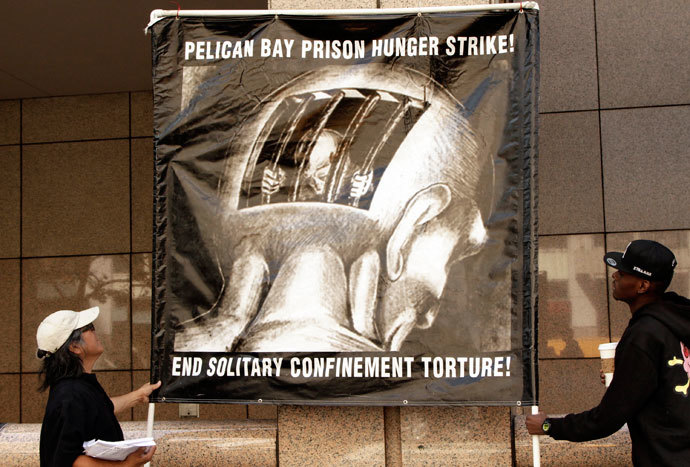
A criminal justice double header this week:
In theGrio, my thoughts on why Obama should NOT tap NYPD commissioner Ray Kelly for the head of Homeland Security (hint: racial profiling). Click HERE for more.
And in McClatchy-Tribune News Service, a look at the mass hunger strike taking place in California's prison system. Click HERE for more.
August 22, 2011
The 20th anniversary of the Crown Heights riots
August 19 marks the twentieth anniversary of the infamous Crown Heights riots. In 1991, the Brooklyn, New York neighborhood was rocked by three days of unrest and racial discord that became a flashpoint in black-Jewish relations and altered New York City's political landscape.
Check out my full analysis at theGrio, where I get to "The Heart of the Matter."

Check out my full analysis at theGrio, where I get to "The Heart of the Matter."
March 27, 2009
Our House Is On Fire, Part 3: New York, City of the Poor

By David A. Love, BlackCommentator.com
The following is the third part of an ongoing Color of Law series.
Click here to read Part 1 of this series: Our House Is On Fire, Part 1: Now the Robber Barons Replace the Welfare Queens (and Rightly So).
Click here to read Part 2 of this series: Our House Is On Fire, Part 2: Please Don’t Feed the Prison Monster
As the song goes, “If I can make it there, I’ll make it anywhere, it’s up to you, New York, New York.” The problem is that if you are counting on making it in New York City, you could be setting yourself up for disappointment.
A recent report by The Center for an Urban Future, a public policy organization dedicated to dealing with the problems facing low-income and working-class neighborhoods in New York City, suggests that the Big Apple is too expensive for most people to live. The report, called Reviving the City of Aspiration: A study of the challenges facing New York City’s middle class, confirms what many New Yorkers already knew anecdotally - with an ever-widening gap between earning power and expenses, New York is unable to sustain a middle class. In a city where even many upper middle class families are stretched to their limits, the cost of living is beyond the reach of most working families. The city lost more than its fair share of blue collar manufacturing jobs over the years. There are no new jobs to create or sustain a middle-class lifestyle, and there is little hope of upward mobility. New York City never was cheap, but it was once perceived as a city of aspiration, a place where people could live, work, scratch their way up the ladder, and raise a family. But people are leaving, and the path from poverty to the middle class is proving far more elusive.
These days, the city is losing a number of demographic groups, including people with a bachelor’s degree, families, immigrants, municipal workers, and the Black community of Eastern Queens, one of the country’s largest African American middle class populations.
Meanwhile, the ranks of the poor are rising. In 2005, 46% of New Yorkers living in poverty held regular jobs, a 17 point increase from 1990. And 31% of New Yorkers over age 18 work in low wage jobs.
There are a number of challenges facing working families. First and foremost, of course, is the high cost of living, particularly exorbitant housing costs. In addition, the price New Yorkers pay for electricity, phone service, auto insurance, parking, milk, home heating oil and state and local taxes are among the highest in the nation. While most families require two working parents to make ends meet, child care is prohibitively expensive, averaging $13,000 to $25,000 per year, per child. Then there are the inferior quality schools and the long, uncomfortable commutes on public transportation for people who live outside Manhattan, in one of the outer boroughs. And there was the housing boom which led to haphazard construction, diminishing the aesthetic qualities of many New York City neighborhoods, and straining the infrastructure of many communities.
Just to understand how bad things are, consider this: in Manhattan, the nation’s most expensive urban area, it takes an annual salary of $123,322 to enjoy the same standard of living as someone making $50,000 in Houston. In San Francisco, the nation’s second most expensive place, you would need $95,489 to live like that person in Houston. In Queens, NY (the fifth most expensive area in the nation) $85,918. In Nassau County, NY, $83,168. In Los Angeles, $80,583. In Boston, $72,772. What about Philadelphia? You would require $69,196. Chicago, $63,421. In Atlanta, only $53,630.
As for those who are leaving New York, where are they going? Well, it should be no surprise that they are moving to places such as Philadelphia. I’m not surprised because I am a New Yorker who moved to Philadelphia. I was born and raised in New York, and although I had lived in a number of places - as diverse as Boston, Detroit and Tokyo - I was a New Yorker. You can never really get the New York out of your system, even if you try, and you probably wouldn’t want to do it in any case. A New York community activist and journalist, I came to Philly for law school, where I met my wife, a Philadelphian turned New York activist. We had grand ideas of moving to Brooklyn after law school. But we were pulled back to Philadelphia, in no small measure, because we had expensive college and law school education, but with public interest careers with modest salaries serving underserved communities. You do the math. And besides, Philadelphia is a great city with a distinctive, down-to-earth character, a thriving arts community and public parks, and a sizable progressive community, albeit with its problems and challenges like any other city.
Meanwhile, New York, the capital of American capitalism and global capitalism, has become a city that only AIG executives, hedge fund managers, art dealers, and hotshot corporate lawyers can afford. The rest are poor, strangled and struggling. This is a scenario that would make Dickens blush. Yet, this was in the works for years before the economic crisis, in a city and a nation that has witnessed the dramatically widening gap between rich and poor, via public policy. And how telling that the titans of capitalism - who have brought down Wall Street through their own unchecked greed, and have no qualms about taking their corporate stimulus welfare payments - are now fighting vigorously to kill the Employee Free Choice Act and other initiatives that would help average working New Yorkers earn a living and raise their families.
As the report notes, there are a number of things that should be done to save New York: better-paying jobs, upgrades to infrastructure, diversifying the economy to include green jobs, and utilizing community college as a path to upward mobility. And there is the need to move away from the construction of luxury developments and sports stadiums, towards building affordable homes for everyday families, people with middle incomes, and professionals.
In the end, New York City provides a reality-based cautionary tale about the future of America, mired in poverty, about its priorities, what it has become and what it can become. This city that never sleeps, and other cities as well, will experience economic and social death without a vibrant middle class and viable opportunities to earn a living.
Click here to read Part 1 of this series: Our House Is On Fire, Part 1: Now the Robber Barons Replace the Welfare Queens (and Rightly So).
Click here to read Part 2 of this series: Our House Is On Fire, Part 2: Please Don’t Feed the Prison Monster.
Subscribe to:
Posts (Atom)